
Planning a trip abroad for medical care can feel overwhelming, and figuring out what paperwork to bring shouldn’t add to your stress. A common misconception among international patients is that they need to pack every single medical document they’ve ever received.
Here is the good news: you don’t. When consulting an overseas specialist, what matters most is clarity. Your receiving doctor needs to understand your case quickly, and drowning them in a massive stack of unrelated paperwork can actually slow down your care.
To make your first consultation as efficient as possible, here is exactly what you need to bring.

The “Must-Have” Medical Records Checklist
For an initial specialist review, prioritise quality over quantity. The most useful records usually include:
A Brief Medical Summary: A clear, concise timeline of your health journey.
Your Primary Diagnosis: Documentation showing exactly what your diagnosis is and how it was confirmed.
Pathology Reports: Essential if your condition involves biopsies or lab-tested tissue samples.
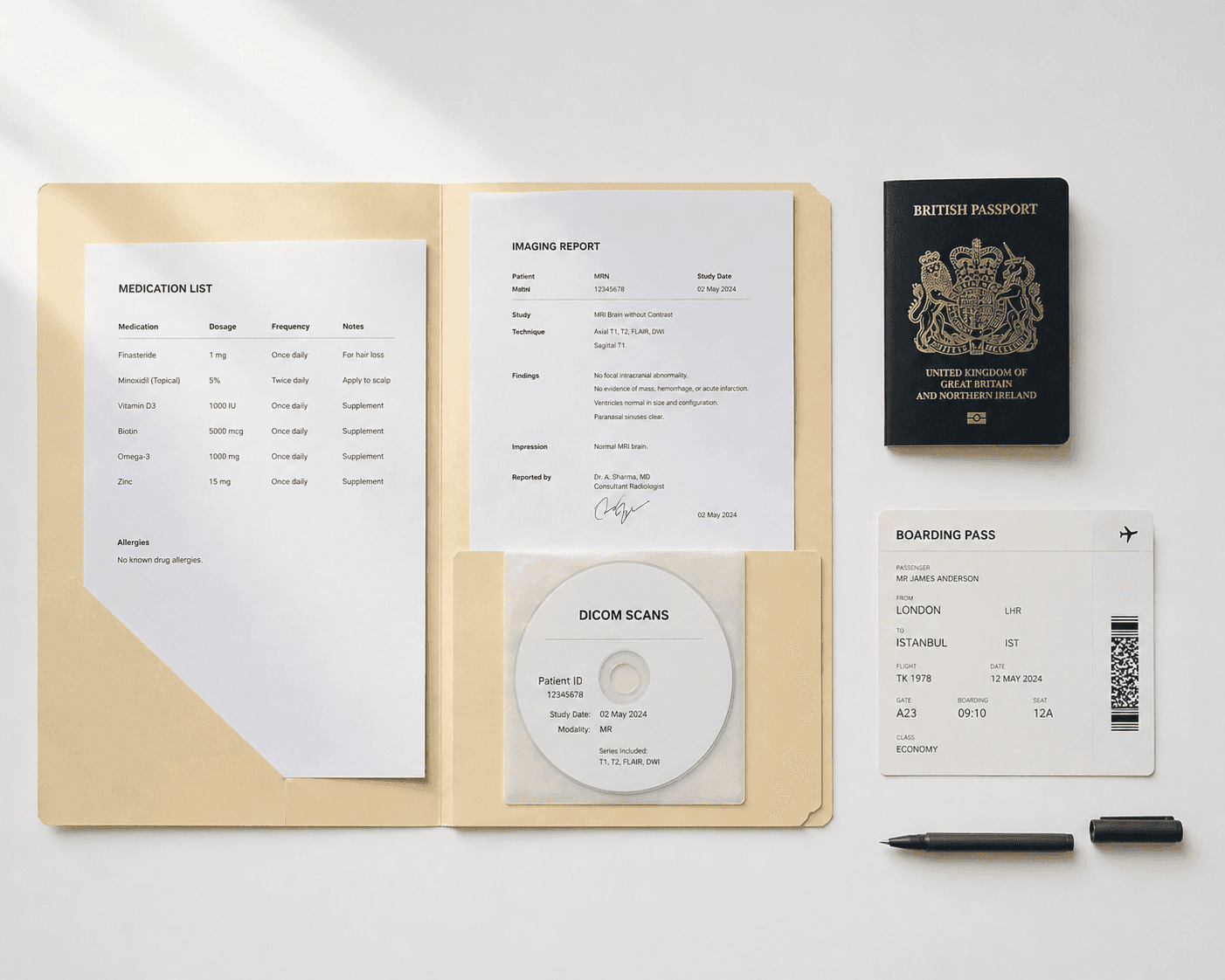
Recent Imaging Reports: The written interpretations of your latest X-rays, MRIs, CT scans, or PET scans.
Original Scan Files (DICOM): Don’t just bring the paper reports. Bring the actual digital scan files (often provided on a CD or USB drive) so your new doctor can review the raw images themselves.
Surgical and Treatment History: Operative notes or logs of previous treatments (such as chemotherapy or physical therapy).
Major Discharge Summaries: Official summaries from any significant hospital stays.
Current Medications and Allergies: An up-to-date list of everything you are currently taking, including dosages, and any known allergic reactions.
The Secret to a Seamless Consultation: Organisation
A slim, well-structured folder is infinitely more valuable to a busy specialist than a heavy box of disorganised papers.
Pro Tip: Arrange your medical records to tell the chronological story of your health.
If possible, organise your file in this simple order:
The Beginning: When and how your symptoms started.
The Confirmation: How your diagnosis was officially confirmed.
The Intervention: What treatments or surgeries were performed.
The Outcome: How your condition changed after those treatments.
The Present: What your most recent test results show right now.
Structuring your medical history this way makes the initial review highly efficient and drastically reduces the chances of delays caused by missing or hard-to-find information. By coming prepared and organised, you allow your new medical team to focus on what truly matters: your treatment and recovery.